
Sommerliche Strand- und Ozeanposter: Ideen für Balkon und Loggia
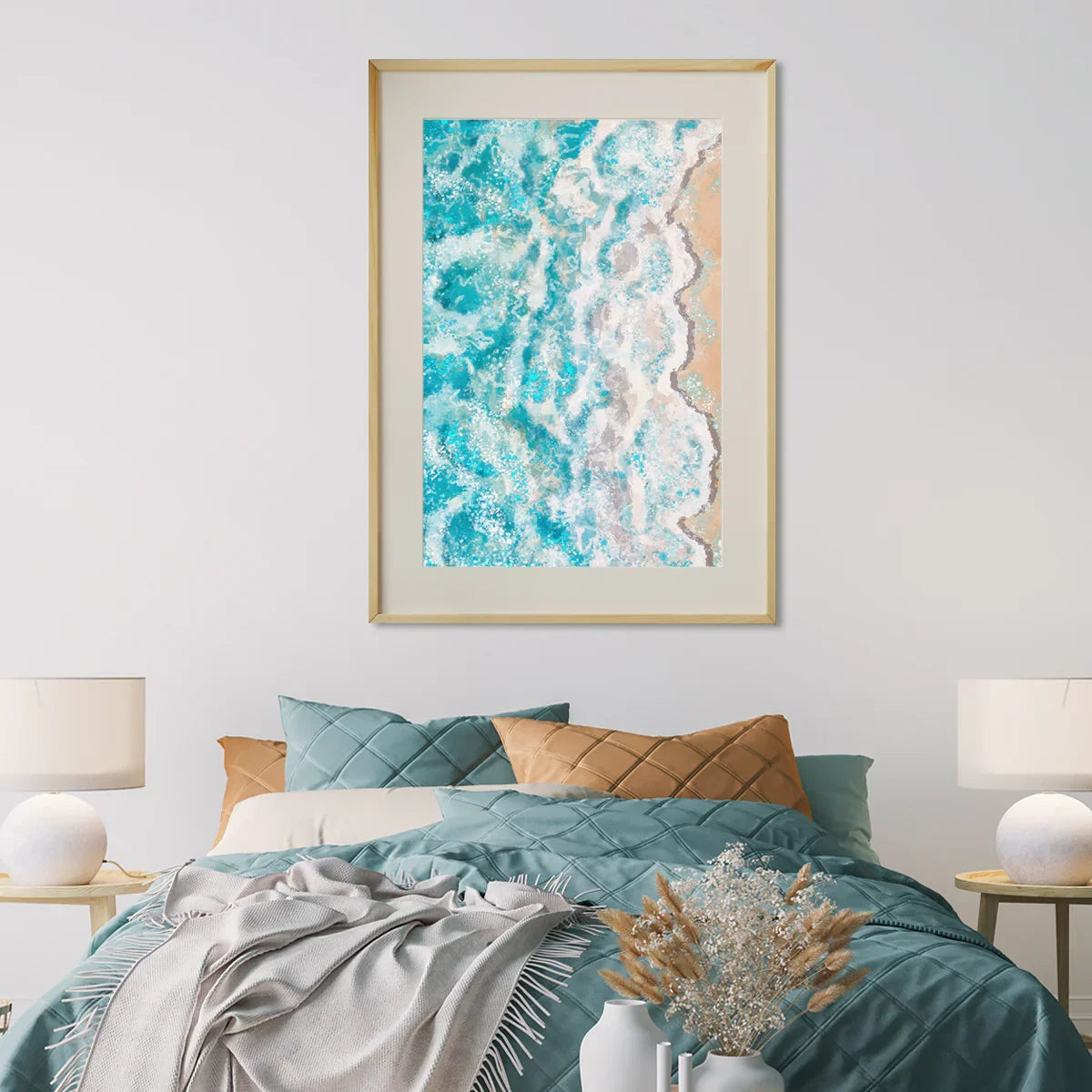
Möchten Sie, dass sich Ihr Balkon oder Ihre Loggia wie eine frische Meeresbrise anfühlt? Dieser Leitfaden zeigt Ihnen, wie Sie Poster mit Meeres- und Ozeanmotiven in der richtigen Größe anordnen, einrahmen und platzieren, damit sie im Freien (oder im Halb-Freien) optimal zur Geltung kommen. Außerdem erhalten Sie 15 CetArt-Empfehlungen für sommerliche Designs.
Luftig und stilvoll: Warum Meeresposter Balkone und Loggien lieben
Balkone und Loggien bilden Übergangszonen – halb draußen, halb drinnen –, weshalb Meeresmotive hier besonders gut zur Geltung kommen. Blaue Farbtöne kühlen sonnenbeschienene Flächen; Horizontlinien erweitern optisch enge Räume; und sanfte Bewegungsmotive (Wellen, Gischt, Spritzwasser) mildern die Strenge der Architektur.
Für ein harmonisches Gesamtbild greifen Sie die gewünschte Stimmung oder Aussicht auf: ruhige Morgenstunden (Pastellblau), energiegeladene Brandung (Tiefblau und Marineblau) oder tropische Wärme (Meerschaum, Koralle, Sand). Motive wie Quallenposter oder Schildkrötenbilder bringen Leben und Dynamik ins Spiel, ohne zu überladen zu wirken.
Intelligente Größenanpassung für kleine Stellflächen
Als Faustregel gilt: Hängen Sie Ihr Kunstwerk mittig in Augenhöhe auf; viele Profis verwenden dafür im Innenbereich einen Abstand von ca. 145–152 cm (die sogenannte „57–60-Zoll-Regel“). Auf Balkonen sollte der Mittelpunkt mit Ihrem bevorzugten Steh- oder Sitzplatz übereinstimmen. Über Konsolen oder Pflanzgefäßen sollte das Kunstwerk etwa zwei Drittel der Möbelbreite einnehmen, um ein harmonisches Gesamtbild zu erzielen.
Profi-Tipp: Vertikale Formate lassen enge Balkone höher wirken; ein schmales Triptychon kann den Blick nach außen lenken und die wahrgenommene Tiefe erweitern.
- Bei Sitzplätzen in Geländerhöhe: Unterkante ca. 20–25 cm über der Oberfläche.
- Für schmale Säulen: Versuchen Sie es mit schmalen Einzelelementen im Format 30×40 cm oder 40×50 cm.
- Für offene Giebelwände: ein markantes Hauptmotiv im Format 50×70 cm oder 60×90 cm.
- Bei langen Loggien: Eine lineare Reihe von Elementen im Abstand von 5–8 cm sorgt für Rhythmus.
Weiterführende Informationen zu Platzierungsstandards: ein hilfreicher Überblick der Designredakteure von The Spruce und eine praktische Aufhängeanleitung von The Guardian .
Witterungsbeständige Materialien und Rahmen
Poster können in überdachten Außenbereichen gut aufbewahrt werden, solange sie vor direktem Regen und starker UV-Strahlung geschützt sind. Wählen Sie aus Sicherheitsgründen Rahmen mit Acrylglas (leicht und bruchsicher) anstelle von Glas; UV-filterndes Glas kann das Ausbleichen verlangsamen. Bei halboffenen Loggien verhindern eine versiegelte Rückwand und ein passgenauer Rahmen das Eindringen von Feuchtigkeit.
- Rahmen mit Acrylglas (Plexiglas) anstelle von Glas für mehr Sicherheit im Außenbereich.
- Verwenden Sie UV-filternde Verglasung, wenn Sonneneinstrahlung unvermeidbar ist.
- Um das Eindringen von Feuchtigkeit zu reduzieren, bringen Sie eine dünne Dichtung oder ein Dichtungsband um die Rahmenrückwand an.
Hilfreiche Informationen: UV-beständige Verglasungsoptionen in Museumsqualität von GroGlass und Eigenschaften von Acrylglas im Vergleich zu Glas von AC Plastics . Maßnahmen zur Witterungsbeständigkeit von Ausstellungsstücken: Lösungen zur Bilderaufhängung .
Balkon-Empfehlungen: Wave & Horizon 5-Produkte


Kühle die Hitze: eine balkonfreundliche Küstenpalette
Sommerbalkone profitieren von Farben, die kühler wirken als die Außentemperatur. Setzen Sie auf ein dreifarbiges Farbschema: Himmelblau (Puderblau/Meerschaumgrün), Wasserblau (Türkis/Marineblau) und Sand (warmes Beige). Verwenden Sie den hellsten Ton für Textilien (sie bleichen am wenigsten aus), heben Sie sich dunklere Blautöne für gerahmte Poster auf, bei denen UV-Schutzglas hilft, und setzen Sie mit einem korallenfarbenen Akzent einen schönen Kontrast.
- Sanfte Morgen: Himmelblau + Ecru + silberne Beschläge.
- Küsten-Grandmillennial: Marineblau + Muschelweiß + Rattan.
- Mediterrane Loggia: Meerschaumgrün + Terrakotta + olivgrüne Pflanzen.
Weitere praktische Hinweise zum Thema Sonnenlicht von The Spruce .
Layouts: ein Hauptbild, schmale Galerie oder Bilderleiste
Ein einzelnes Bild: Ideal für kleine Balkone – wählen Sie ein Bild mit einem markanten Horizont. Schmale Galerie: Zwei oder drei 30×40 cm große Bilder, gleichmäßig verteilt, sorgen für einen rhythmischen Effekt entlang einer langen Loggiawand. Geländerleiste: Wenn Ihr Geländer es zulässt, ermöglicht eine geschützte Bilderleiste unter der Dachuntersicht, die Kunstwerke je nach Jahreszeit neu zu platzieren.
Montage ohne Bohren (und wann man bohren sollte)
Wo Bohren verboten ist, können leichte Rahmen mit robusten, wetterfesten Klebehaken befestigt werden; bei Mauerwerk verwenden Sie, sofern zulässig, Mauerwerkshaken oder -anker. Bei Putz oder Fassadenverkleidungen verwenden Sie einen für den Außenbereich geeigneten Klebstoff und reinigen Sie die Oberflächen gründlich.
- Verwenden Sie D-Ringe/Draht aus Edelstahl, um Rost zu vermeiden.
- Bringen Sie an den Ecken transparente Stoßdämpfer an, um die Luftzirkulation hinter den Rahmen zu gewährleisten.
- Vermeiden Sie Glas im Außenbereich; Acrylglas ist sicherer und leichter.
DIY-Anleitungen: Nagelfreies Aufhängen von Dekorationen im Außenbereich an Fassaden/Putz (via H2OBungalow ). Tipps zum Mauerwerksbau finden Sie in den Anleitungen zum Aufhängen von Gartendekorationen.
Loggia-Auswahl: Underwater Calm 5-Produkte


Das Mikroklima ist wichtig: Sonne, Wind und Salz
Südbalkone benötigen eine durchdachte Beschattung – wählen Sie indirekt beschattende Wände und UV-beständiges Glas. Bei windigen Lagen sollten Sie auf sichere Beschläge und schlanke Rahmen achten. Küstenluft (oder Stadtstaub) erfordern gelegentliches Reinigen der Acrylglasscheiben und eine staubabweisende, versiegelte Rückseite.
- Wenn möglich, sollten beschattete Wände UV-Glas vorgezogen werden – Schatten ist die bessere Wahl.
- Verwenden Sie Befestigungselemente aus Edelstahl; vermeiden Sie rohen Stahl in der Nähe von Salz oder Feuchtigkeit.
- Acryl mit einem Mikrofasertuch und einem kunststoffverträglichen Reiniger (ohne Ammoniak) abwischen.
Stilkombinationen, die harmonieren (und Urlaubsfeeling vermitteln)
Küsten-Grandmillennial
Marineblaue Streifen, geschwungene Kanten, Rattanmöbel. Kombinieren Sie dazu einen Vintage-Wellenprint und Messingclips. Weitere Inspirationen finden Sie in unserem Ratgeber für küstenblaue Canvas-Stoffe .
Japandi-Brise
Gebleichtes Holz, Leinen, minimalistische Linien; dazu ein abstraktes Meeresmuster und ein einzelner Olivenbaum. Für weitere ruhigere, moderne Kombinationen stöbern Sie in unseren Raumpostern .
Mediterrane Loggia
Terrakotta-Pflanzgefäße, weißer Kalkputz, ein sanftes meergrünes Triptychon. Entdecken Sie tropische Ruhe mit Postern zum Thema Tropenparadies .
Skandinavischer Sommer
Gebleichte Terrassendielen, helle Textilien, eisige Blautöne. Entdecken Sie unsere Tipps für skandinavische Wandgestaltung im Küstenstil .
Pflanzen und Textilien, die die Meereskunst lieben
- Pflanzen wie Olivenbäume, Rosmarin, Agaven oder kompakte Gräser spiegeln die Küstenlinie wider.
- Textilien: UV-behandelte Kissen in Himmelblau/Sand; gestreifte Überwürfe als Muster.
- Teppiche: Ein kurzfloriger Outdoor-Teppich in Sandfarbe, der das Licht reflektiert und die Farbpalette abkühlt.
Inspirationen für die Balkongestaltung: Ausgewählte Ideen für kleine Räume von führenden Designhäusern bieten Layouts und Pflanzenkombinationen zum Nachmachen in wenigen Minuten.
Vom Balkon ins Wohnzimmer: Leinwand- und Statement-Drucke (5 Produkte)


Leute fragen auch – schnelle Antworten
- Kann man Poster auf einem Balkon aufhängen? Ja – idealerweise überdacht, vor direktem Regen und starker Sonneneinstrahlung geschützt, in Rahmen mit Acrylglas und UV-Schutz.
- Wie kann ich die Leuchte ohne Bohren aufhängen? Für leichte Rahmen eignen sich wetterfeste Klebehaken/-streifen; falls Bohren erlaubt ist, verwenden Sie zugelassene Mauerwerksaufhänger.
- Welche Größe eignet sich am besten für kleine Balkone? Einzelbilder von 30×40 cm bis 50×70 cm oder ein schmales Triptychon.
- Welche Farben wirken kühler? Himmelblau, Türkis und sandfarbene Neutraltöne – siehe unsere Farbpalette .
- Poster oder Leinwand? Poster sind unauffälliger und lassen sich leicht austauschen; Leinwände bieten Tiefe und Struktur. Siehe Kaufberatung .
- Wird mein Kunstwerk verblassen? Licht lässt Kunst verblassen; Schatten und UV-Schutzglasur verlangsamen diesen Prozess. Wechseln Sie die Bilder saisonal aus.
- Und wie sieht es mit Wind aus? Wählen Sie leichtere Rahmen, sichere Beschläge und Schutzpuffer.
- Kann ich eine Bilderwand gestalten? Ja – achten Sie auf geringe Abstände (5–8 cm) und einheitliche Farben.
- Welche Themen passen zu Pflanzen? Quallen zu Gräsern; Schildkröten zu Sukkulenten; Vintage-Surf-Stil zu Palmen.
- Eine gute Starthilfe? Stöbern Sie in den Kategorien „Meer & Ozean“-Poster und „Poster fürs Zimmer“ .
7 häufige Fehler (und einfache Lösungen)
- Den ganzen Tag direkte Sonneneinstrahlung. Abhilfe: Schattenwände wählen; UV-Schutzverglasung anbringen.
- Glas im Außenbereich. Lösung: auf Acrylglas umsteigen.
- Über den Möbeln zu klein. Lösung: Etwa zwei Drittel der Breite anstreben.
- Zufällige Abstände. Korrektur: Gleichmäßige Abstände von 5–8 cm.
- Schwere Rahmen an wackeligen Haken. Lösung: D-Ringe aus Edelstahl + geeignete Verankerungen.
- Windrichtungen werden ignoriert. Lösung: Flache Rahmen; Verankerungspunkte an zwei Haken.
- Zu unruhige Farbpalette. Lösung: Beschränken Sie sich auf 3 Küstentöne + einen Akzentton.
Checkliste für Pflege und saisonale Auffrischung
- Die Rahmen monatlich abstauben; Acrylglas nur mit Mikrofasertüchern reinigen.
- Überprüfen Sie die Hardware nach Wind-/Regenereignissen.
- Drehen Sie die Ausdrucke saisonal, um eine gleichmäßige Lichteinwirkung zu gewährleisten.
- Verleihen Sie Ihrem Zuhause jeden Sommer mit einem neuen Kissen oder Teppich eine neue Atmosphäre.
Kurzer Kaufratgeber: Poster vs. gerahmt vs. Leinwand
Poster
Unauffällig, preisgünstig und leicht austauschbar. Ideal für überdachte Loggien oder schattige Balkonwände. Kombinierbar mit schlanken Metallrahmen und Acrylglas.
Leinwanddrucke
Strukturierte Tiefe, keine Spiegelung durch Glas, wirkt großflächig besonders gut. Am besten geeignet für überdachte Bereiche. Für ein Strandhaus-Flair empfiehlt sich eine Leinwand mit sandfarbenen Textilien.
Bei stärkerer Sonneneinstrahlung empfiehlt sich ein schattiger Standort mit UV-filternder Verglasung. Auch mit Schutz sollten die Stücke regelmäßig gedreht werden, um die Farben zu erhalten.