
Scandinavian Nursery Decor: Soft Animal Posters in Pastel Tones
How to design a calm, child-friendly space with gentle color, natural texture, and storybook-sweet animal art — without losing that airy Nordic simplicity.
This deep-dive covers palette, layout, safety, frames, gallery walls, educational picks, and styling that grows from newborn to preschool. Along the way, you’ll find four curated sliders of soft animal posters chosen to harmonize with light woods, cloud whites, and cozy textiles.
Scandinavian nursery, defined
Scandinavian interiors lean on breathable space, natural light, and honest materials. In a nursery, that translates to pale woods (birch, ash), matte whites, and a soft, low-chroma palette that soothes rather than stimulates. The look is tidy and tactile—think woven baskets, wool throws, linen curtains, and a handful of playful objects that earn their place.
“Keep what you love, hide what you don’t, and let the room breathe.” That’s the Scandi nursery mantra.
Design sources frequently emphasize restraint, texture, and functionality: open floors for play, low visual noise, and daylight that feels soft, not stark. Animal posters in pastel tones fit this perfectly: they add character and story while staying gentle enough for nap-time calm.
Primary keywords focus: Scandinavian nursery decor, pastel nursery posters, soft animal prints, kids wall art, minimalist nursery.
Pastel palette & materials that feel calm
Choose a base of warm white (not blue-white), add natural wood, then layer 1–2 pastel notes—dusty blush, misty sage, powder blue, buttercream, or mushroom gray. Pastels with a touch of gray (muted saturation) feel especially Nordic and help your art sit quietly on the wall.
Material map
- Woods: birch, ash, light oak—oil finishes read softer than glossy lacquers.
- Textiles: cotton, linen, wool bouclé; avoid plasticky shine.
- Storage: woven baskets and low shelving to reduce visual clutter.
- Metal accents: brushed brass or matte black in tiny doses.
Pro tip: If a color feels “too sweet,” add a charcoal stripe or black-and-white animal print to rebalance.
Choosing animal subjects (and the moods they bring)
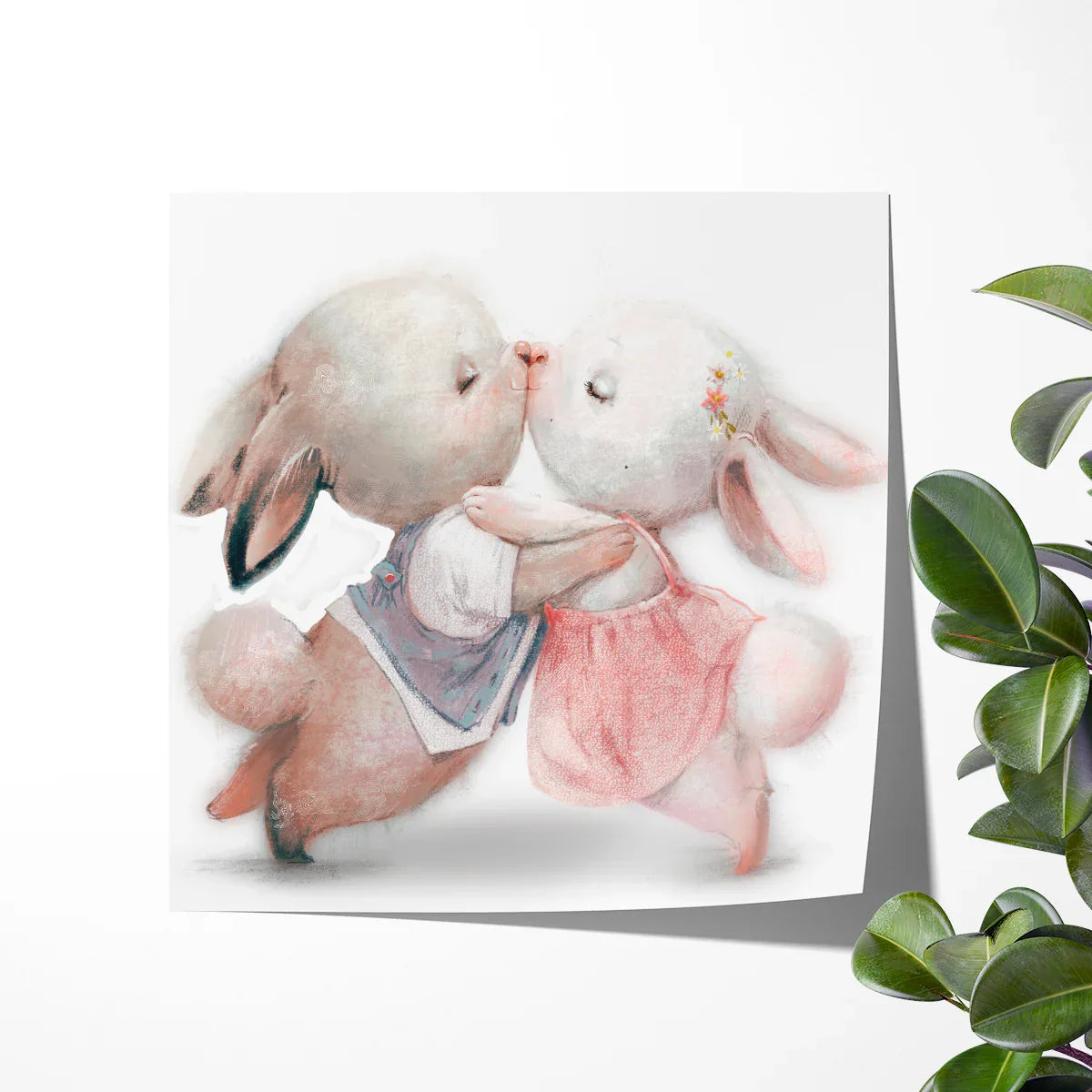
Pastel animals aren’t only cute; they carry quiet cues. Rabbits read gentle and nurturing, koalas feel cozy and sleepy, giraffes suggest curiosity, foxes are playful, and pandas deliver monochrome calm. Limit the palette across prints so the room stays cohesive.
| Animal | Vibe | Palette Pair |
|---|---|---|
| Rabbit | Comfort & tenderness | Blush, fog gray, warm white |
| Koala | Cozy, nap-time calm | Misty green, pebble, birch |
| Giraffe | Curious & bright | Buttercream, sand, white oak |
| Fox | Playful focus point | Rust blush, oatmeal, charcoal |
| Panda | Graphic balance | Black, white, soft sage |
Curated Picks I — Gentle Forest Friends


Sizing & placement (cheat table included)
Over a crib or changing table, aim for art width ≈ 60–75% of the furniture width. Center the print and leave a calm margin (15–25 cm on each side). Hang tops level for a tidy, Scandinavian read.
| Furniture width | Single print | Two-print set |
|---|---|---|
| 80–100 cm | 30×40 or 40×50 cm | 2× 30×40 cm |
| 100–130 cm | 50×70 cm | 2× 40×50 cm |
| 130–160 cm | 60×90 or 70×100 cm | 2× 50×70 cm |
Pro tip: Larger prints feel calmer from across the room because the composition is easier to read—especially useful at bedtime.
Frames, mats & glazing for a feather-light look
Use thin frames in natural maple, birch, or matte white. A narrow mat (3–5 cm) gives animal posters room to breathe and looks tailored in small spaces. For nurseries, acrylic glazing keeps things safer and lighter than glass.
- White frame + white mat = super airy; great with black-and-white animal prints.
- Natural wood + no mat = warm minimalism; pair with blush or sage pastels.
- Black frame + white mat = graphic balance when the palette feels too sweet.
Two-print & gallery-wall formulas that always work
If you love more than one animal, try a tidy pair: Rabbit + Koala for nap-time calm, or Giraffe + Fox for playful curiosity. Keep frame tones identical and repeat one accent color across both prints.
Spacing cheats
- Pairs: space frames 8–12 cm; align top edges or centers.
- Trios: center the middle print and space evenly; use smaller sizes to stay light.
- Gallery over dresser: 2–4 prints in 30×40 cm looks balanced above 100–120 cm furniture.
Curated Picks II — Neutral & Black-and-White Calm


Three themes: forest, safari, ocean
Scandinavian doesn’t mean same-y. Give your nursery a gentle narrative:
Forest
Think rabbits, foxes, deer. Use linen curtains and woven baskets. Palettes: mushroom gray, pine needle, oatmeal.
Safari
Giraffes, elephants, friendly lions. Keep the palette sandy and pale; one rusty accent can ground the look.
Ocean
Jellyfish or pastel sea maps. Pair with powder-blue textiles and whitewashed wood; keep patterns simple.
Alphabet & maps: art that teaches softly
Educational posters can stay beautifully Nordic: soft letterforms, gentle animals, and low-contrast backgrounds that don’t shout. Hang alphabet art near the reading nook and world-map animals by the play area for tiny geography chats.
“Learning that looks like art.” If it would work in a minimalist living room, it will age gracefully in a nursery.
Browse more friendly options in the Kids Room Posters Collection or the broader Animals Posters hub.
Curated Picks III — Alphabet Sweethearts


Safety, heights & kid-proof hanging
- Keep frames out of reach of little hands (top edge ≈ 145–155 cm from floor). Over the crib, hang higher than 30 cm above the top rail.
- Prefer light frames with acrylic glazing; ensure hangers are rated for the weight.
- For renters or flexible layouts, consider poster rails or adhesive systems within their weight limits.
Pro tip: If you expect active toddlers, secure the bottom corners with museum gel (invisible, removes cleanly).
Light, textiles & layering warmth
Scandi rooms love daylight. Use voile or linen curtains to soften glare, then echo your poster colors in small textiles: a blush muslin swaddle, a sage knit pillow, a pebble-gray rug. Add one tactile star (a wool pouf, a teddy) to keep the space from feeling too pristine.
If your nursery looks good in grayscale, your color balance is already right.
Styling small zones: reading nook, dresser, play corner
Reading nook
Low bookshelf, soft rug, lamp with fabric shade, and a single 40×50 cm animal print at seated eye level.
Dresser zone
One 50×70 cm print centered above, or a pair of 30×40 cm framed equally. A shallow tray keeps lotions tidy.
Play corner
Stash small toys in lidded baskets; mount art slightly higher to avoid bumps.
Curated Picks IV — Whimsy & Smiles


Your 7-step Scandinavian nursery plan
- Pick a theme: forest, safari, or ocean.
- Choose 2 pastels + white oak: e.g., blush & sage.
- Select 1–3 animal posters that share tone and line weight.
- Frame light: maple or matte white; consider a narrow mat.
- Place smart: 60–75% rule, measured spacing, safe heights.
- Layer textures: linen, knit, woven baskets; repeat colors once.
- Add learning: an alphabet or animals map near the reading nook.
Ready to browse widely? See Posters for Room and Animals Posters for more choices that fit this guide.
FAQs
What pastel colors feel most “Scandi” in a nursery?
Dusty blush, misty sage, powder blue, pebble gray, and buttercream. They’re low-saturation, play well with birch wood, and keep the room calm.
How many animal posters should I hang?
One large focal print over the crib or dresser feels tidy. Pairs or trios work if frames match and spacing is even (8–12 cm).
What size looks best above a standard dresser?
Often 50×70 cm single print, or two 40×50 cm prints centered and aligned. Use the 60–75% width guideline.
Glass or acrylic—what’s safer?
Acrylic glazing is lighter and shatter-resistant, making it a family-friendly pick for nurseries.
How do I keep the space from feeling too sweet?
Balance pastels with a black-and-white print (panda, penguin) or add one charcoal stripe via a pillow or rug edge.
Are educational posters “too busy” for a Scandinavian look?
Choose soft letterforms, low-contrast backgrounds, and no more than two accent colors. Place by the reading nook, not the crib.
How can these prints grow with my child?
Start with gentle animals; later swap one piece for a world map or nature poster. The frames and palette can stay the same.
Can I mix canvas and posters?
Yes—keep frames minimal and align edges for a coherent look. Posters near hands-on zones; canvas for higher focal walls.