Black & White Cityscape Canvas Prints for Modern Office Decor
When color steps aside, structure takes the spotlight. Black-and-white cityscapes sharpen focus, add architectural rhythm, and read crisply on camera—perfect for productive workspaces and client-facing rooms.

Table of Contents
- Why Black & White City Art Works for Offices
- Picking Subjects: Skylines, Bridges & Landmarks
- Editor Picks #1
- Size, Scale & Safe Bets
- Canvas vs Framed: Presentation Choices
- Placement, Height & Spacing
- Editor Picks #2
- Lighting & Glare Control
- Styling Around Monochrome
- Editor Picks #3
- Layouts: Statement, Grid, Triptych
- Meeting Rooms & Reception Ideas
- Editor Picks #4
- Care, Longevity & Materials
- Quick Checklist & Next Steps
- Editor Picks #5
- FAQs
- References
Why Black & White City Art Works for Offices
In modern interiors, black & white images reduce visual noise and emphasize geometry—great for maintaining concentration in busy environments. Monochrome art harmonizes with nearly any palette, so your brand colors, plants, or books can carry the accent while the art provides structure. It’s also exceptionally camera-friendly: strong contrast and clean horizons look professional in video calls.
From a design perspective, high-contrast city scenes bring scale to open plans and expand compact rooms with convincing depth. Want the full catalog? Browse our focused hubs for Black & White Wall Art, Cityscapes & Cityviews, and Office Wall Art.
Picking Subjects: Skylines, Bridges & Landmarks
Choose subjects that mirror your office’s personality. Innovative tech teams often favor wide skylines and aerial grids; legal and finance spaces lean into classic landmarks; creatives thrive with rhythmic bridges and street-level perspectives. Consider one “hero” city (your HQ or clients’ city) and two neutrals to keep the story broad.


Size, Scale & Safe Bets
As a quick rule, art above furniture should span about 60–75% of the width of what’s beneath it. For solo statement walls, go large: the print should feel intentional from across the room and still read on camera at arm’s length.
| Wall Situation | Recommended Canvas Size | Why it Works |
|---|---|---|
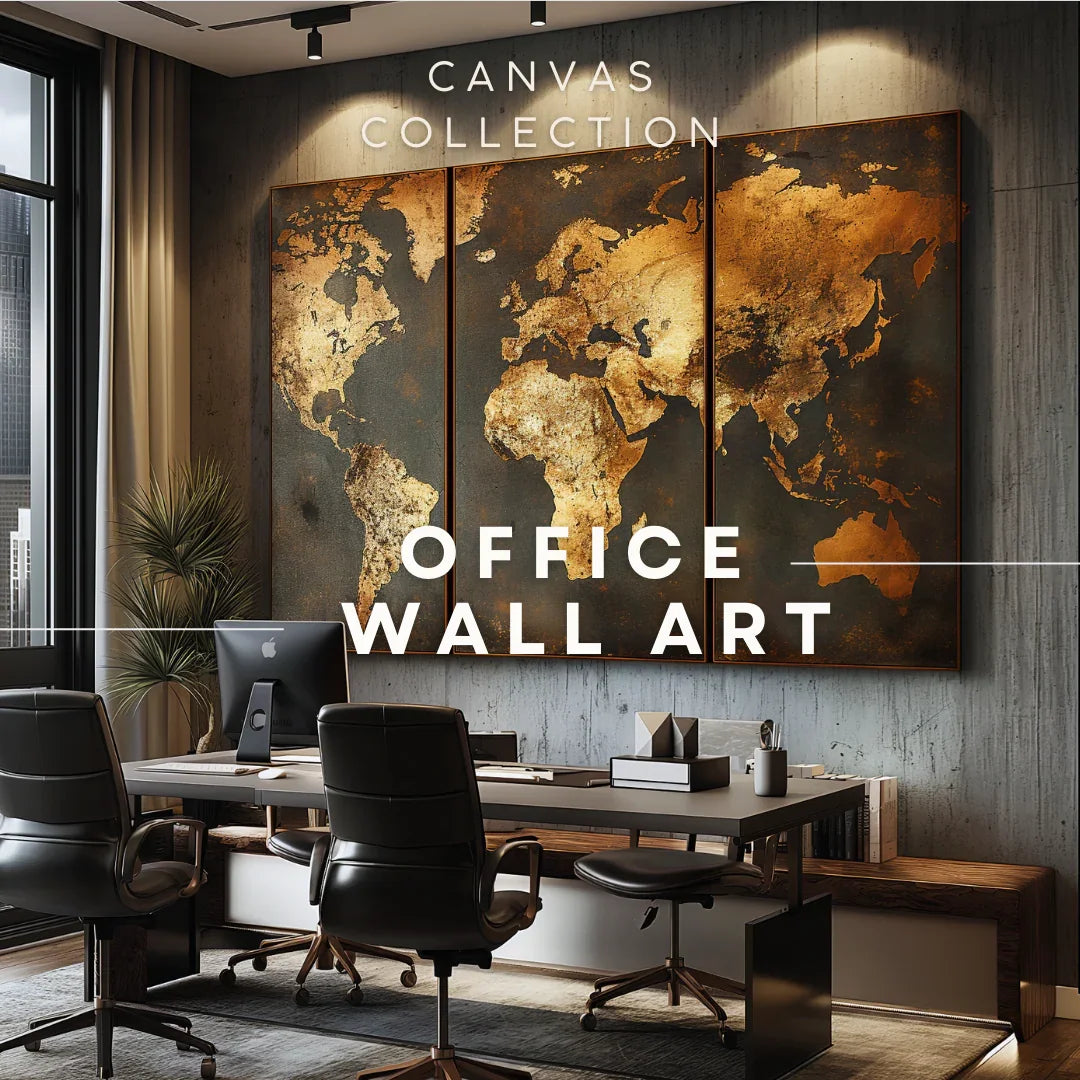
| Behind a 60–72" desk | 36x24" to 48x32" | Strong presence without overpowering meetings. |
| Reception wall (8–12 ft) | 48x32" to 60x40" | Readable logo sightline; clear focal point for visitors. |
| Zoom background | 24x16" to 36x24" | Fits in frame, keeps edges clean at head-and-shoulders crop. |
| Long hallway | Triptych of three 24x16" | Sets rhythm, guides movement along the corridor. |
Canvas vs Framed: Presentation Choices
Canvas prints offer a clean, non-glare surface and arrive ready to hang—great for open offices and bright spaces. Framed paper prints can add polish and a thin black frame echoes the monochrome theme; just watch reflections near windows. For consistency across rooms, keep one presentation type per zone.
Placement, Height & Spacing
Start with the center of the artwork at about 57–60 inches from the floor (average eye level). Over a desk or sofa, keep the bottom edge roughly 6–10 inches above the surface. Space multiple pieces 3–5 inches apart; increase the gap slightly for large formats to let them breathe.


Lighting & Glare Control
Aim for soft, even light. Side lighting enhances texture; overhead hotspots can wash out highlights. If your space gets strong daylight, canvas is your friend—its soft surface minimizes reflections compared to glass-framed prints. Add dimmable task lights and keep artwork out of direct, harsh sun.
Styling Around Monochrome
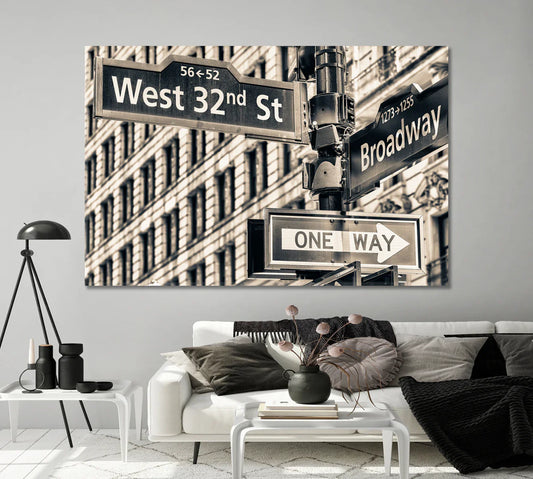
Black & white sets a calm baseline. Layer natural materials (oak, walnut, flax) and a measured accent—one bold color in accessories, or a single print with a signature highlight (hello, yellow cabs). Keep cables tidy and let negative space do its quiet magic.
- Match your metal finishes (matte black or brushed steel) to frame hardware.
- Use a single accent color in stationery, throws, or planters.
- Repeat one geometry from the print (grid/arc) in shelving or rugs.


Layouts: Statement, Grid, Triptych
Single Statement
One large skyline above the credenza = instant identity. Choose landscape for breadth or portrait for height and authority.
Grid Wall
Four to six smaller pieces (same frame/size) read organized and deliberate—great for teams and project rooms.
Triptych
Three panels pace long walls and keep sightlines clear. Keep gaps even; if the set width is 60", three 3/4" gaps yield 61.5" overall.
Meeting Rooms & Reception Ideas
- Boardroom: A serene riverfront or elevated skyline to calm big decisions.
- Stand-up space: Dynamic bridges to keep energy up.
- Reception: Your city, large scale; the clearest “we’re here” you can hang.
- Pods/Booths: Tight-crop architectural details to avoid visual clutter on camera.

Care, Longevity & Materials
CetArt canvas prints are hand-stretched on natural wood bars and coated to resist dust and fingerprints. Maintain with a dry, soft cloth; avoid harsh cleaners. Keep out of sustained direct sunlight or high-humidity zones.
Looking for other subjects for different zones? Try Modern Wall Art or more wall art ideas.
Quick Checklist & Next Steps
- Pick your hero city + 2 supporting scenes.
- Measure wall/desk and target 60–75% width coverage.
- Choose canvas (low glare) or framed paper (polished). One finish per zone.
- Hang center at ~57–60" from floor; keep 3–5" between pieces.
- Tune lighting; avoid reflected hotspots in video frames.

Black & White Cityscape Office Art — FAQs
What canvas size works best behind a 60–72" desk?
36x24" to 48x32" keeps strong presence without overwhelming video calls.
Canvas or framed print for bright offices?
Canvas: lower glare and lightweight. Framed paper: refined edge; just position away from strong reflections.
How high should I hang wall art?
Start around 57–60" to the center from the floor, then adjust for furniture and camera framing.
How do I avoid glare on glass-framed prints?
Use side lighting, matte glazing, or rotate slightly so hotspots bounce away from viewers.
Can B&W prints work with colorful furniture?
Absolutely. Monochrome creates balance; let textiles and plants carry the color.
What subjects feel most professional?
Recognizable skylines, bridges, and architectural studies—clean lines read best on camera.
How do I clean CetArt canvases?
Dust with a dry, soft cloth. Avoid solvents and direct, harsh sun.
What’s a solid Zoom backdrop layout?
One centered print 24x16"–36x24", with clear edges and 6–10" above the chair back.